I tried this thing before and found it quite strange. Today I saw it again and saved it.
Ancient craftsmen who made teapots or wine pots for the imperial court were strictly forbidden to leave their own names on them. Those who were discovered were executed, but there were still bold people who tried every means to leave their names in hidden places. This phenomenon also appeared in Microsoft's "Word". One of the writers of Microsoft's Chinese character library, Hu Wanjin, also left his own name in it. I don't know what the intention is. You can see it by following the methods below:
1. Open Word
2. Type the Chinese character "胡" in Word
3. Encircle the character "胡", open the right-click menu of the mouse, and click "Font"
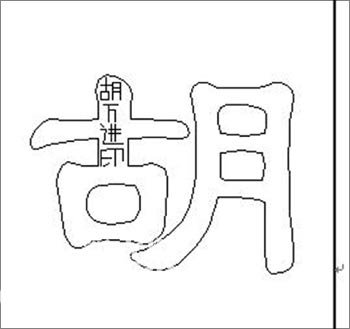
4. In the "Font" property bar, change the font to "Li Shu", change the effect to "Hollow", and change the size to: Initial size
5. Close the font property bar and set the display proportion of the page to "500%"
There are four small characters "胡万进印" in the font.
If the font is set to "You Yuan", these characters are also included.
The same Chinese characters include: 淠 惡 讫 玍 扎 哟 岡 汚 汩 浞 珐 杌 柿 殻 砼 鉢 錯 镁 秫 耒 岡 玍 翟 卯 卞 畋 曰 莱 隹.
In ancient China, whenever a craftsman finished making something, he would carve his name on it to prove that the thing was made by himself. "Ancient teapot craftsmen liked to carve their names in the most hidden place of the teapot dedicated to the emperor (usually inside the spout of the teapot). Although it would be beheaded if discovered, many craftsmen still did it with great enthusiasm." Professor Song said: "There is no doubt that Hu Wanjin is a person who is familiar with the development history of Chinese characters. His idea is the same as that of ancient teapot craftsmen. Leaving names in the characters is to prove that these characters were invented and made by himself, although it may attract scolding or punishment... From another perspective, his practice actually inherits a tradition, inheriting the practice of ancient craftsmen to protect his cultural patent. The so-called 'geese leave their voices when passing by and people leave their names when passing by' is probably for this reason!"